

Hi
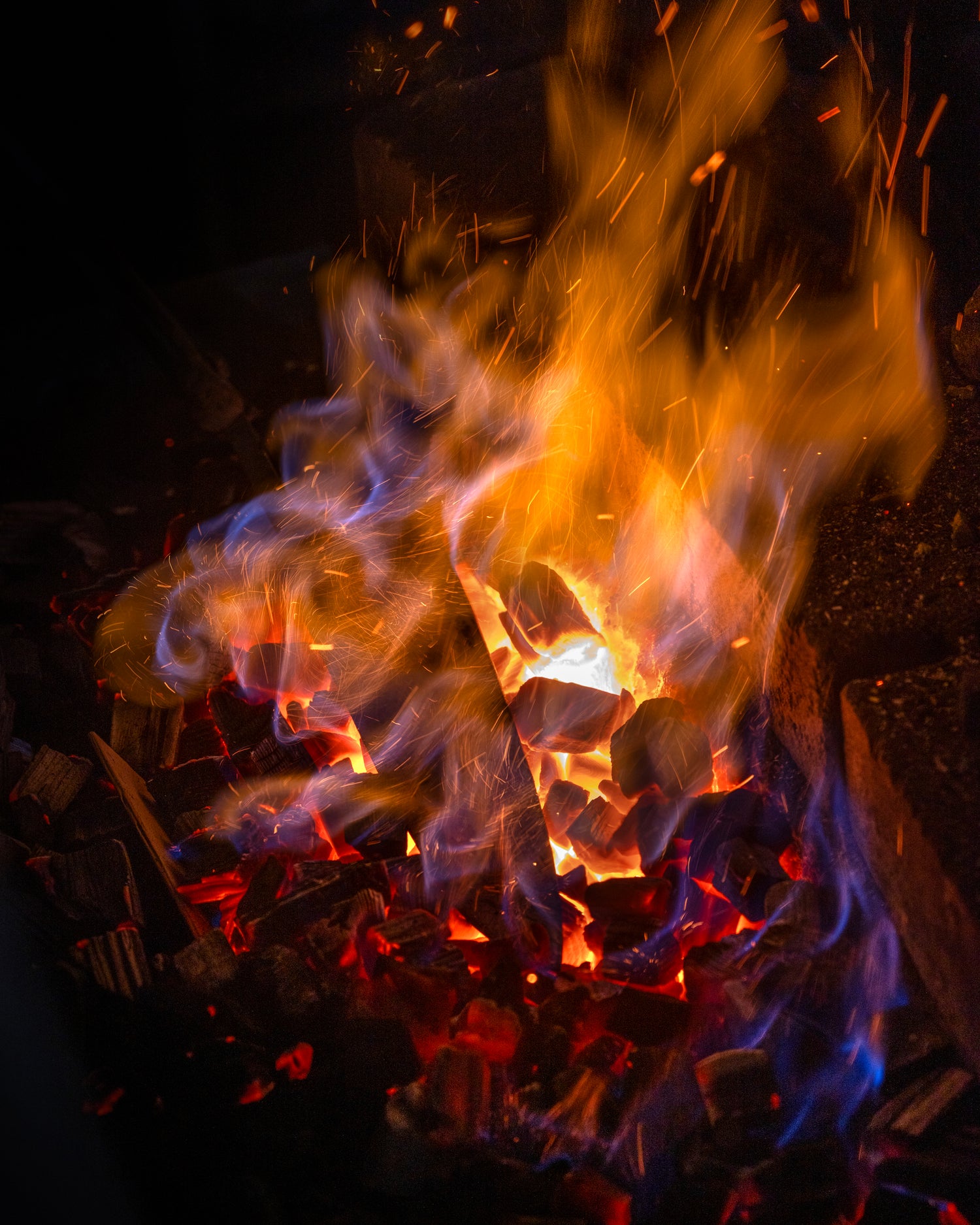
the fire
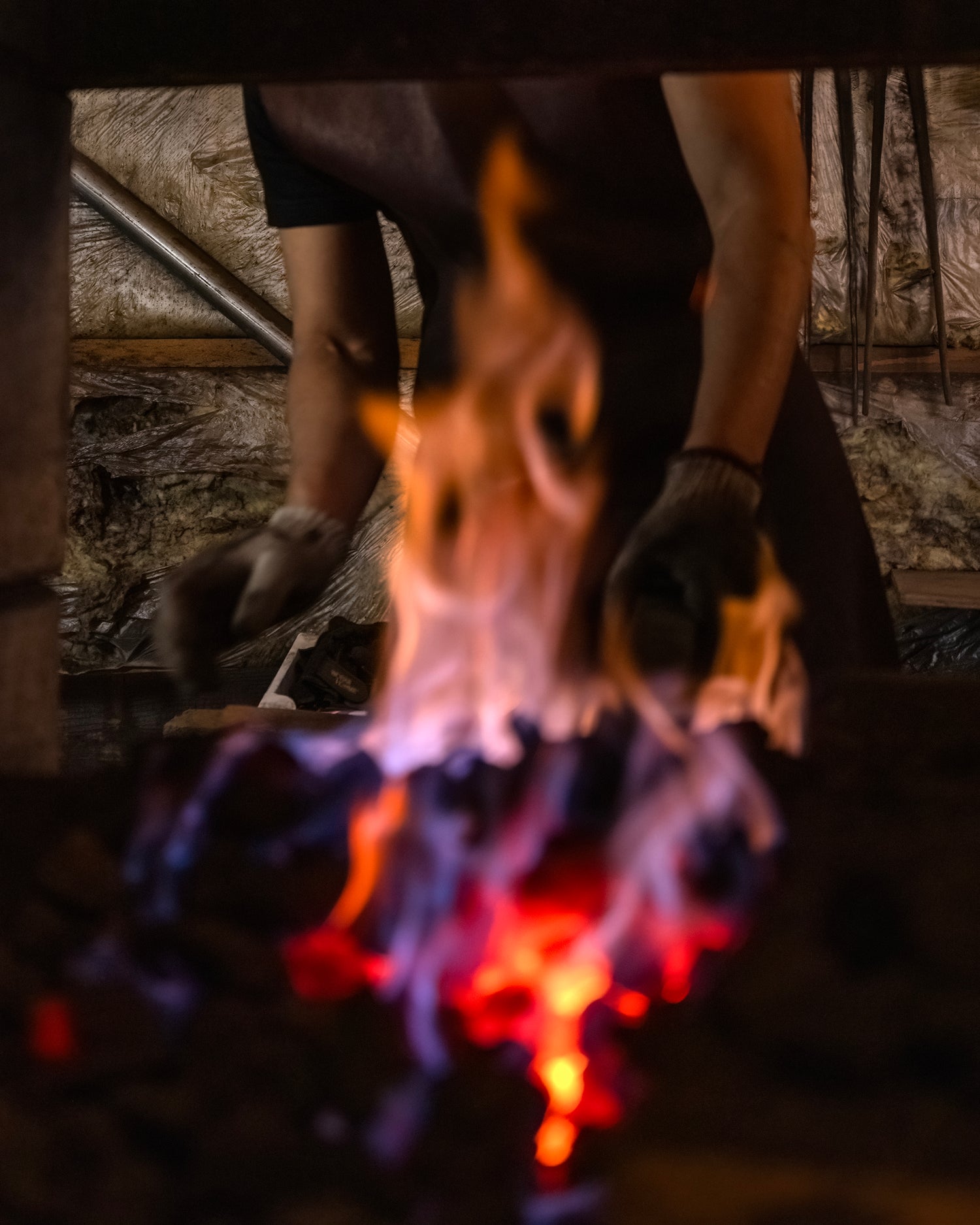
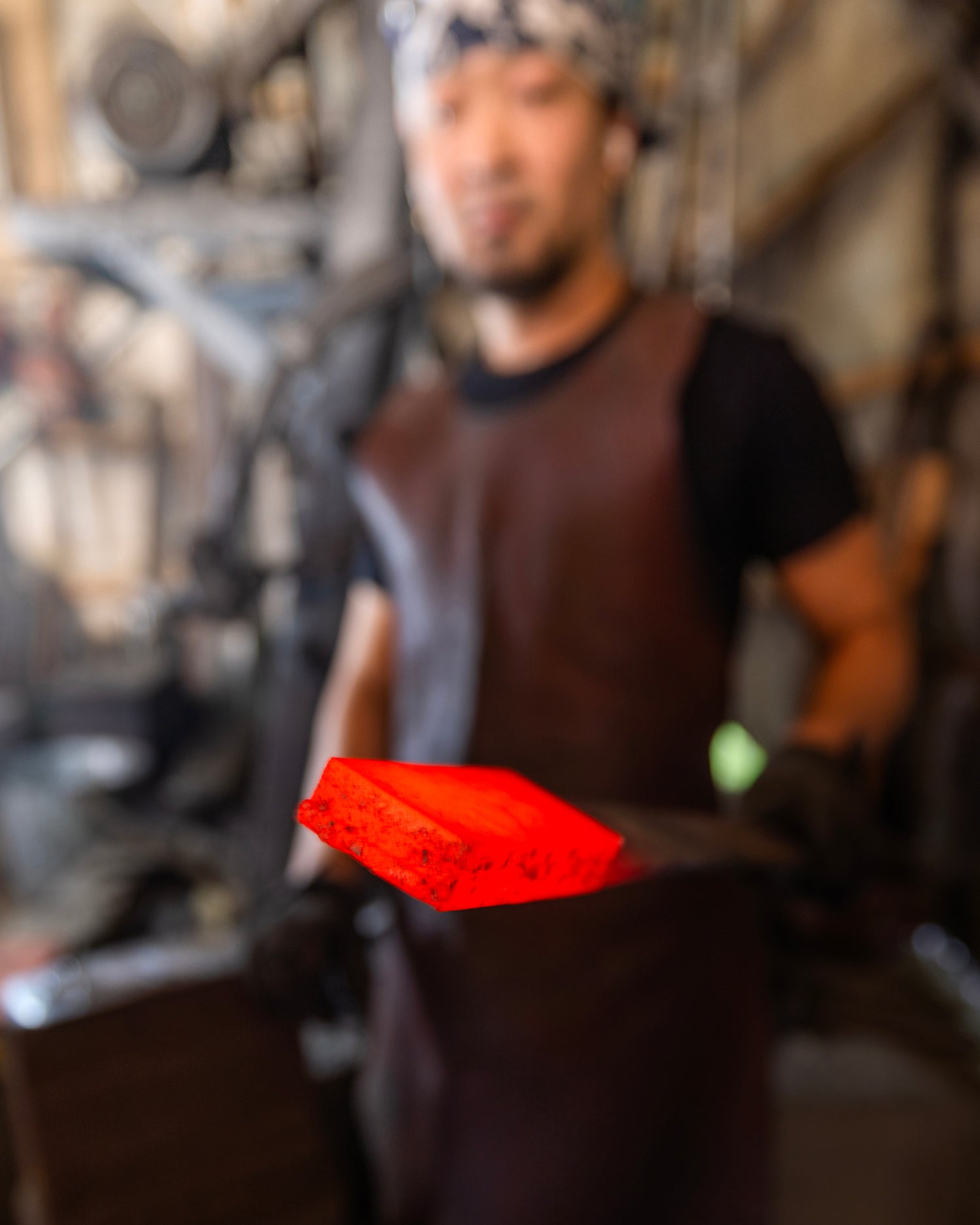
The quality of the forge fire depends on careful selection of the fuel. The coal is first cut into pieces of uniform size, generally calibrated according to the specific heating requirements. Pieces that are too large would slow the temperature rise, while pieces that are too fine would burn too quickly, generating unwanted ash and impurities. This precise calibration ensures regular combustion and a constant supply of heat, an essential condition for reaching the high temperatures necessary for working steel, while controlling the atmosphere in the hearth to prevent oxidation of the pieces being forged.
Sanmai
Three-layer lamination
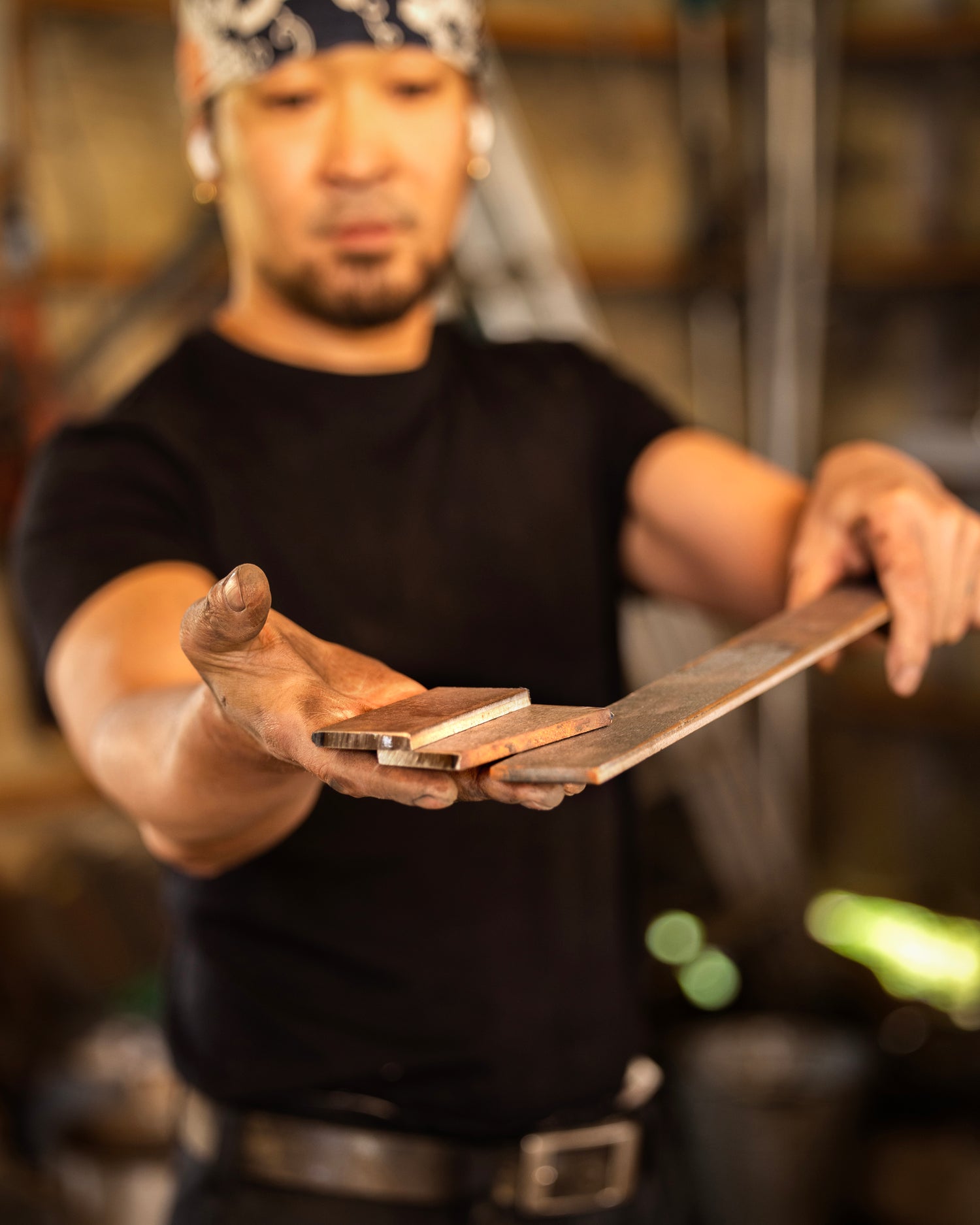
The process begins by fusing three layers of steel: a central layer of high-carbon steel (鋼) to ensure exceptional sharpness, framed by two outer layers of stainless steel (地鉄). This layered structure gives the blade an ideal combination of hardness and flexibility, facilitating sharpening and increasing durability.
Hizukuri 火造り
Obtaining the general form
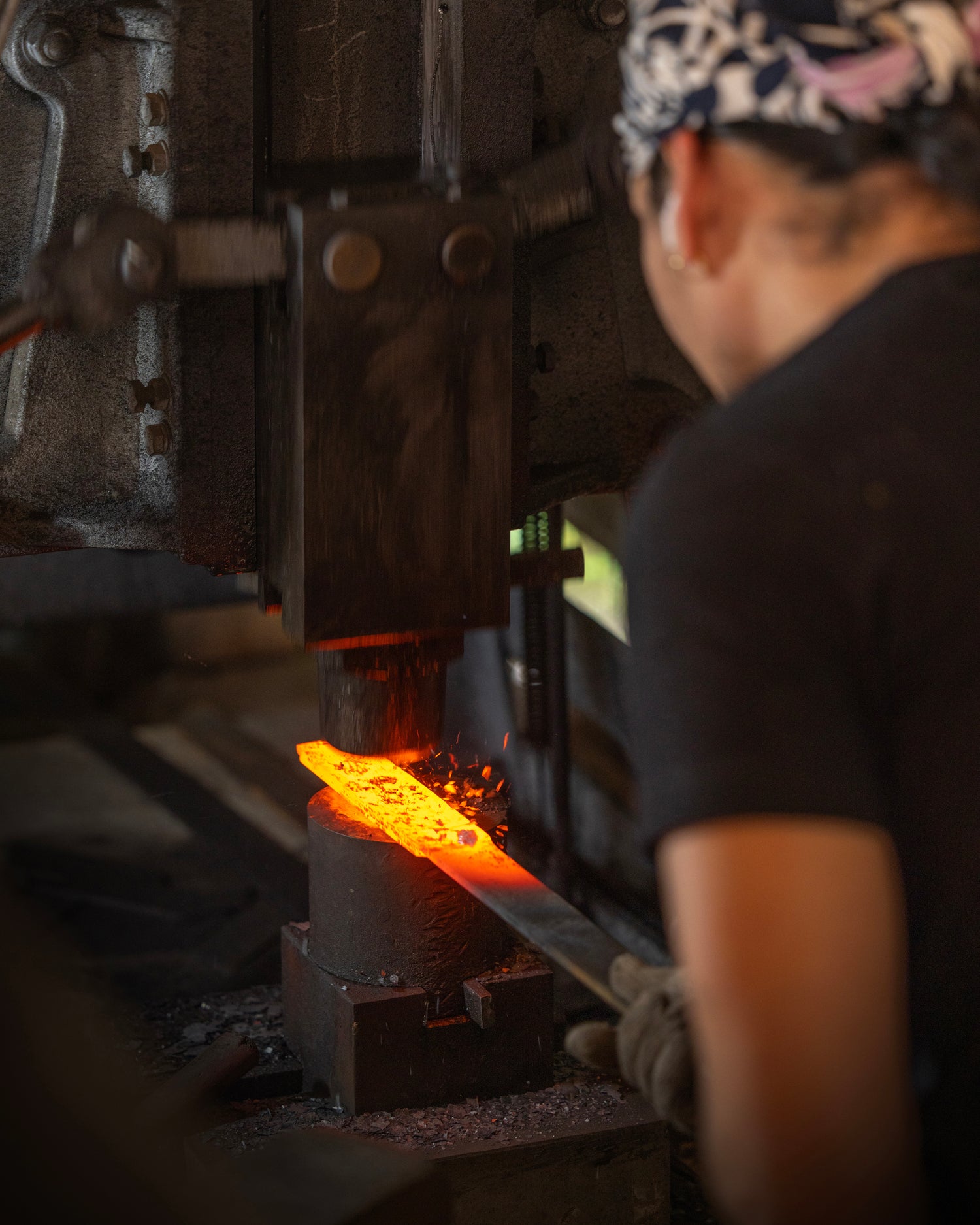
The rolled steel block is heated to a high temperature and then hammered into shape. This process refines the internal structure of the metal, improving its density and strength.
Narashi 均し
Uniform thickness
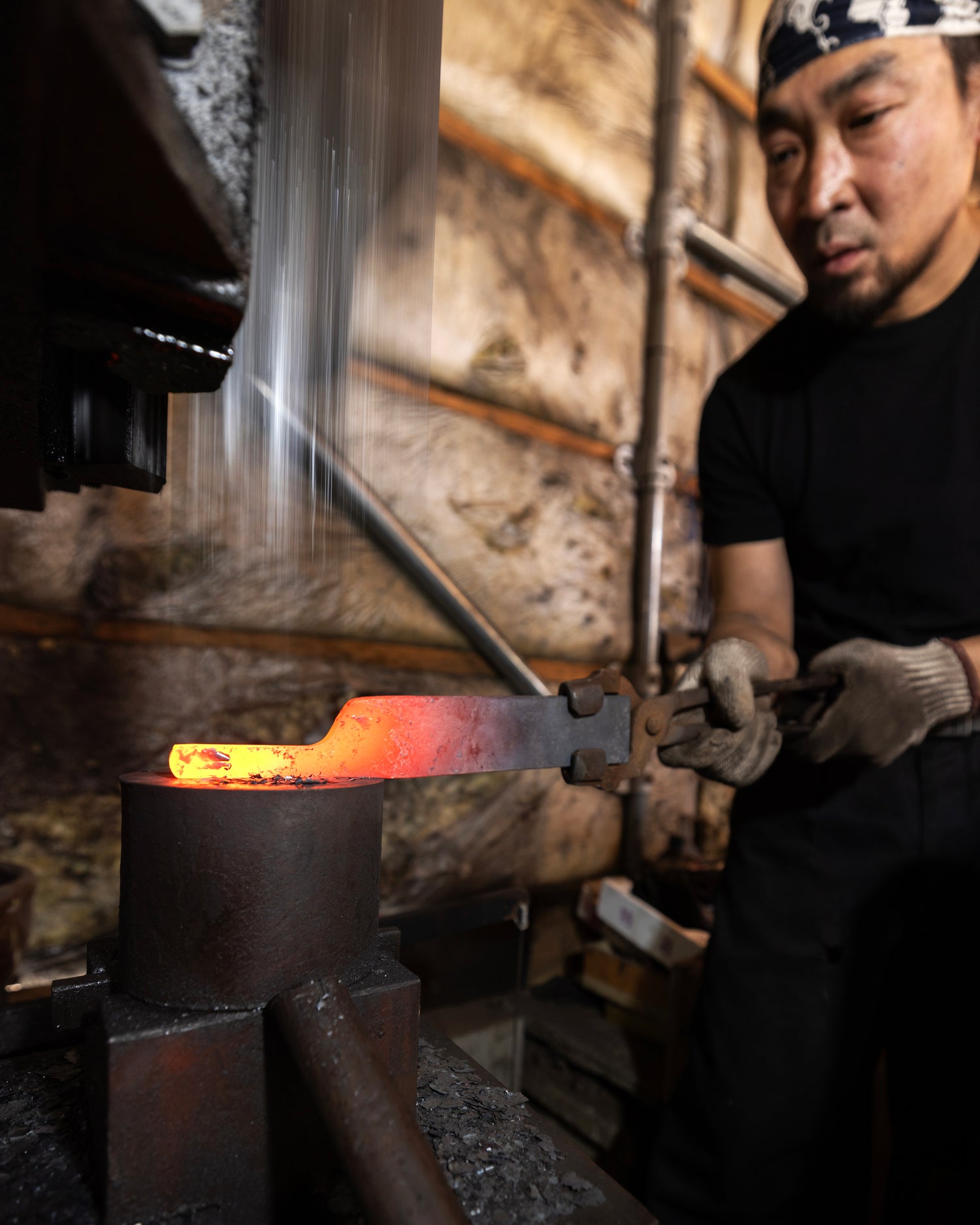
After the initial forging step, the blade is hammered to even out its thickness and correct any deformations. This step prepares the blade for subsequent heat treatments.
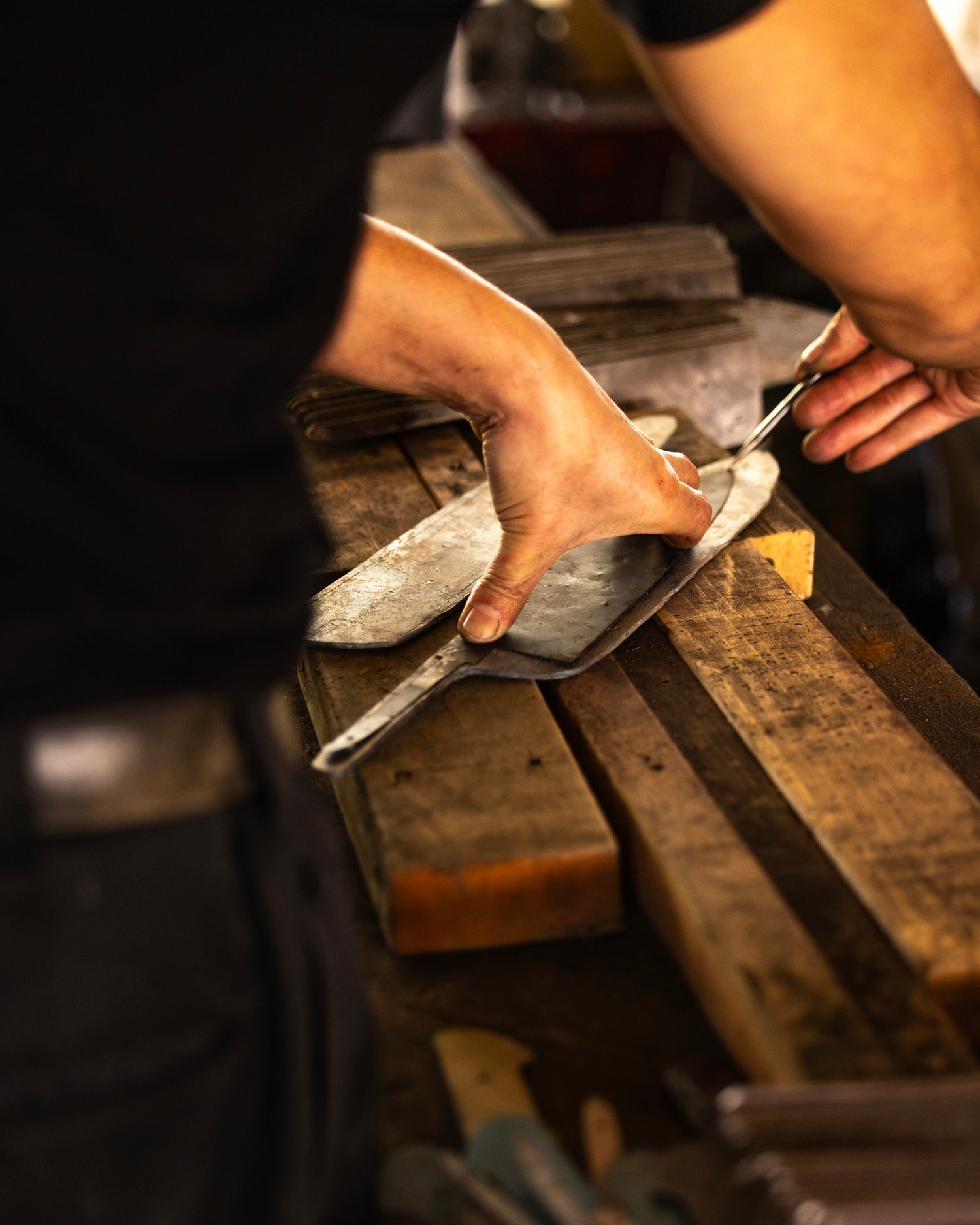
Seikei 整形
Obtaining the final shape
The blade is carefully shaped to achieve its final profile. This includes forming the tip, spine, and tang, which is the part inserted into the handle.
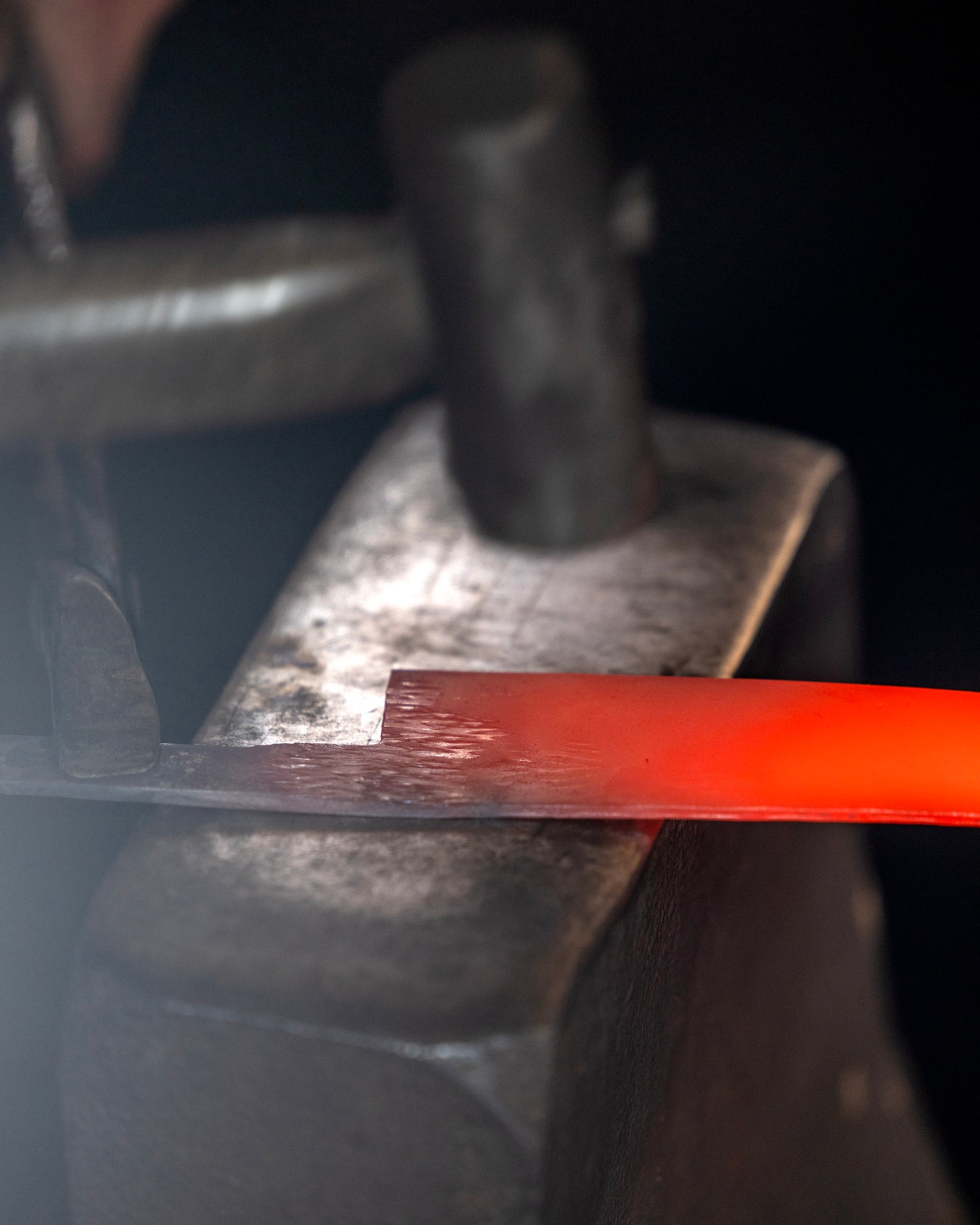
Tsuchime 槌目
Decorative hammering
A hammered pattern is applied to the surface of the blade, not only for aesthetic reasons, but also to reduce food sticking when cutting.
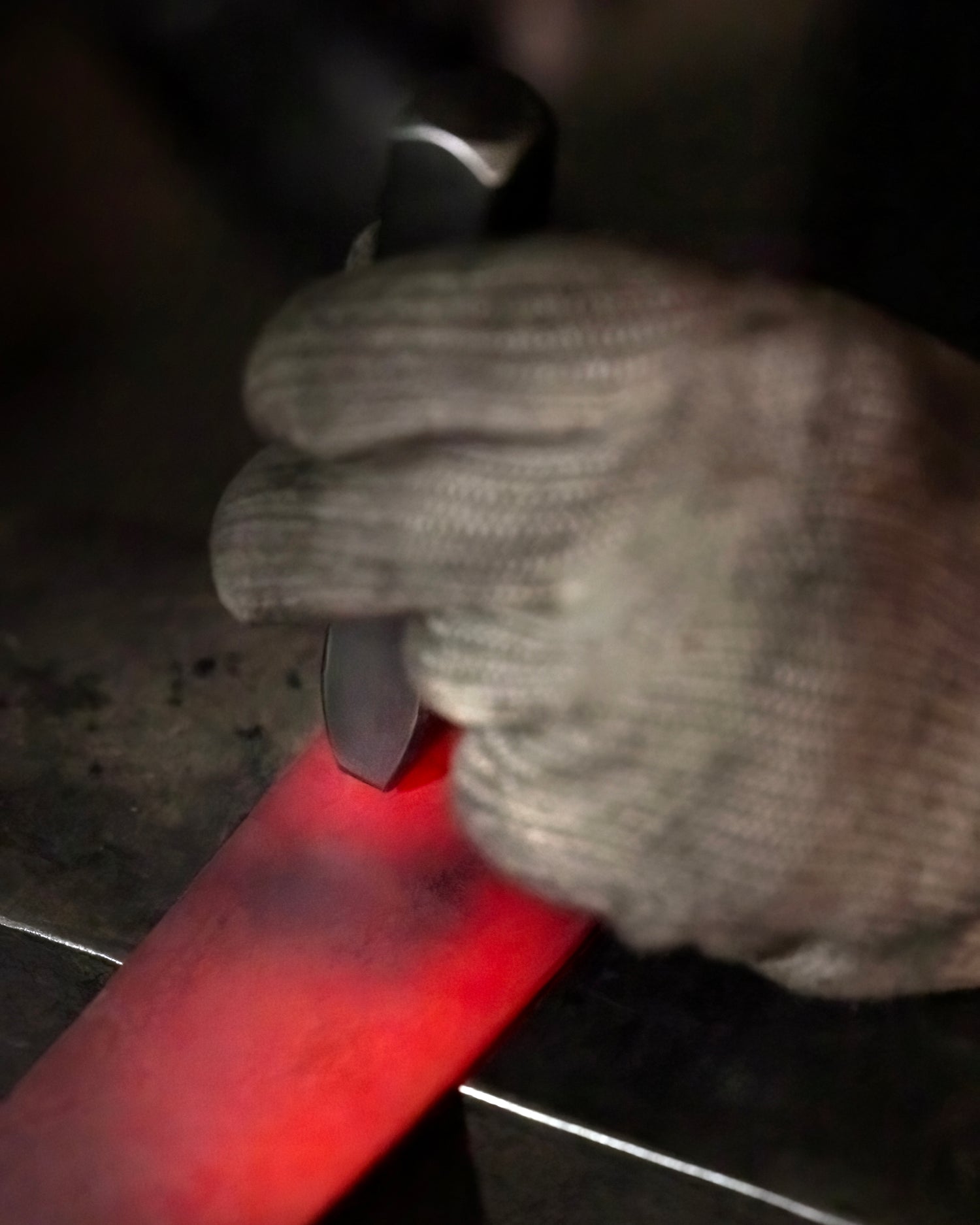
Kokuin 刻印
Stamping the seal
The name is engraved on the blade, attesting to its authenticity and provenance.
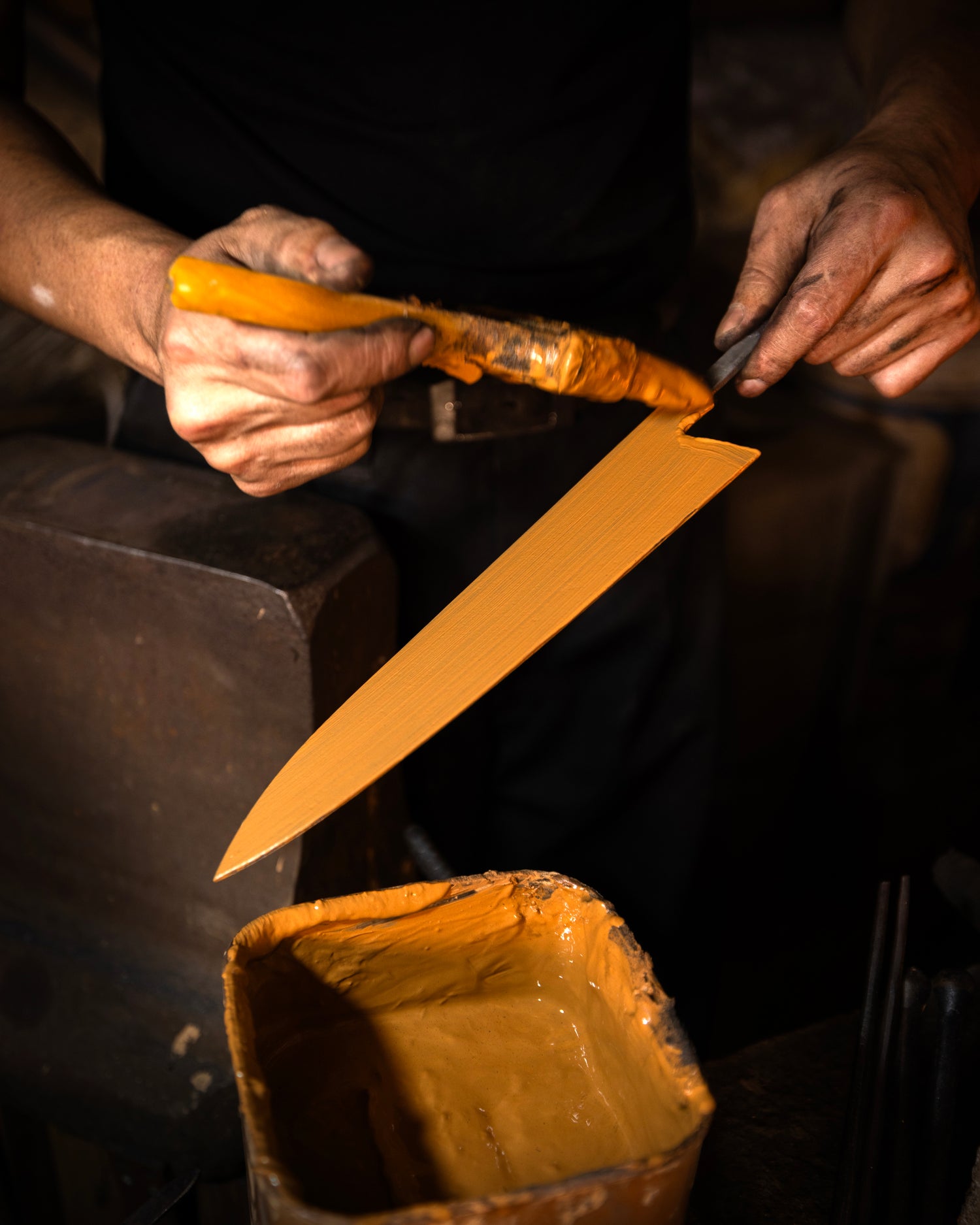
Yaki-ire 焼き入れ
Thermal treatment
The blade is heated to a specific temperature and then quickly quenched in water to harden the steel. This process gives the blade its characteristic hardness.
Yaki-modoshi 焼き戻し
Heat treatment II
After tempering, the blade is heated to a lower temperature to reduce its brittleness and increase its toughness. This step balances the blade's hardness and flexibility.
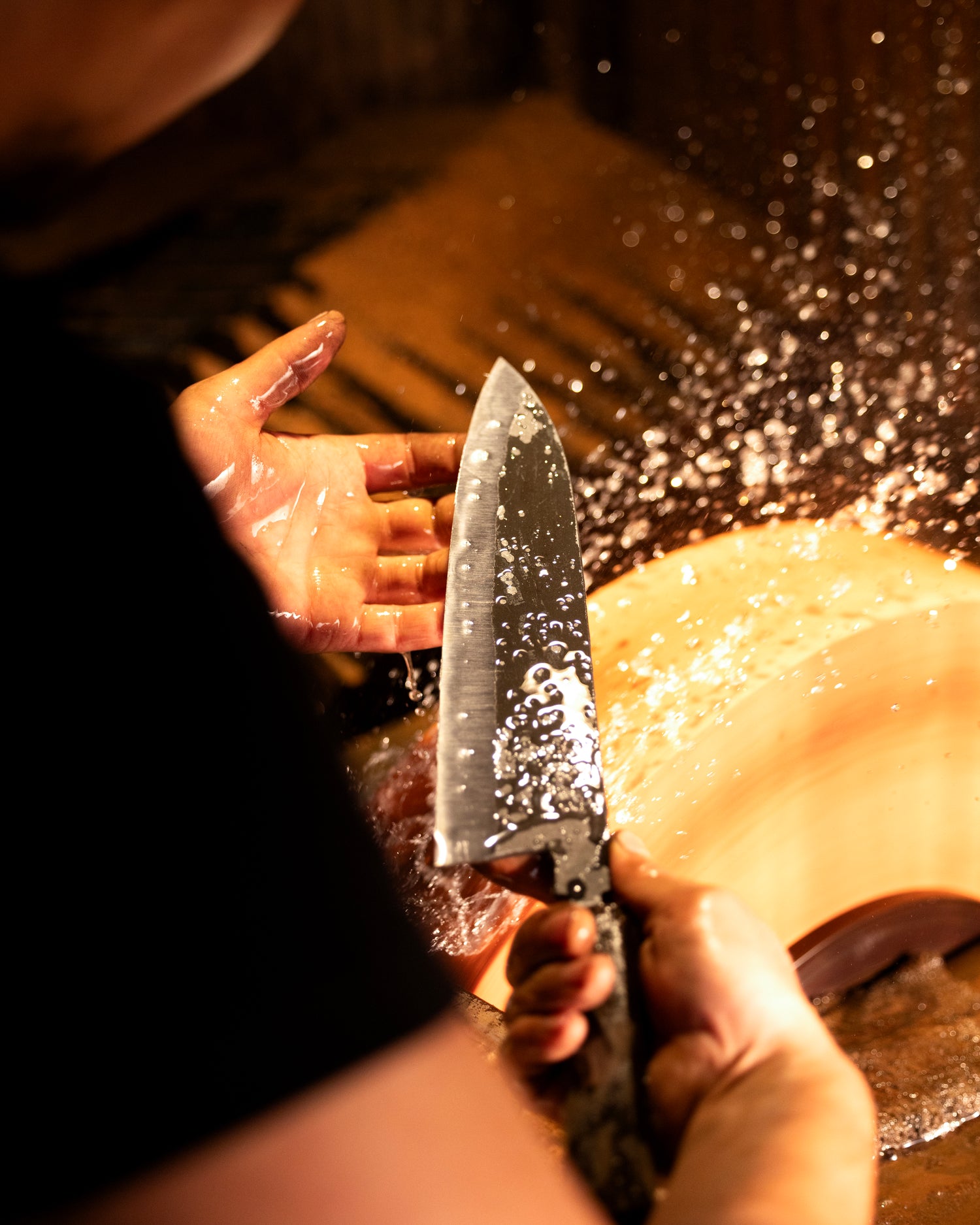
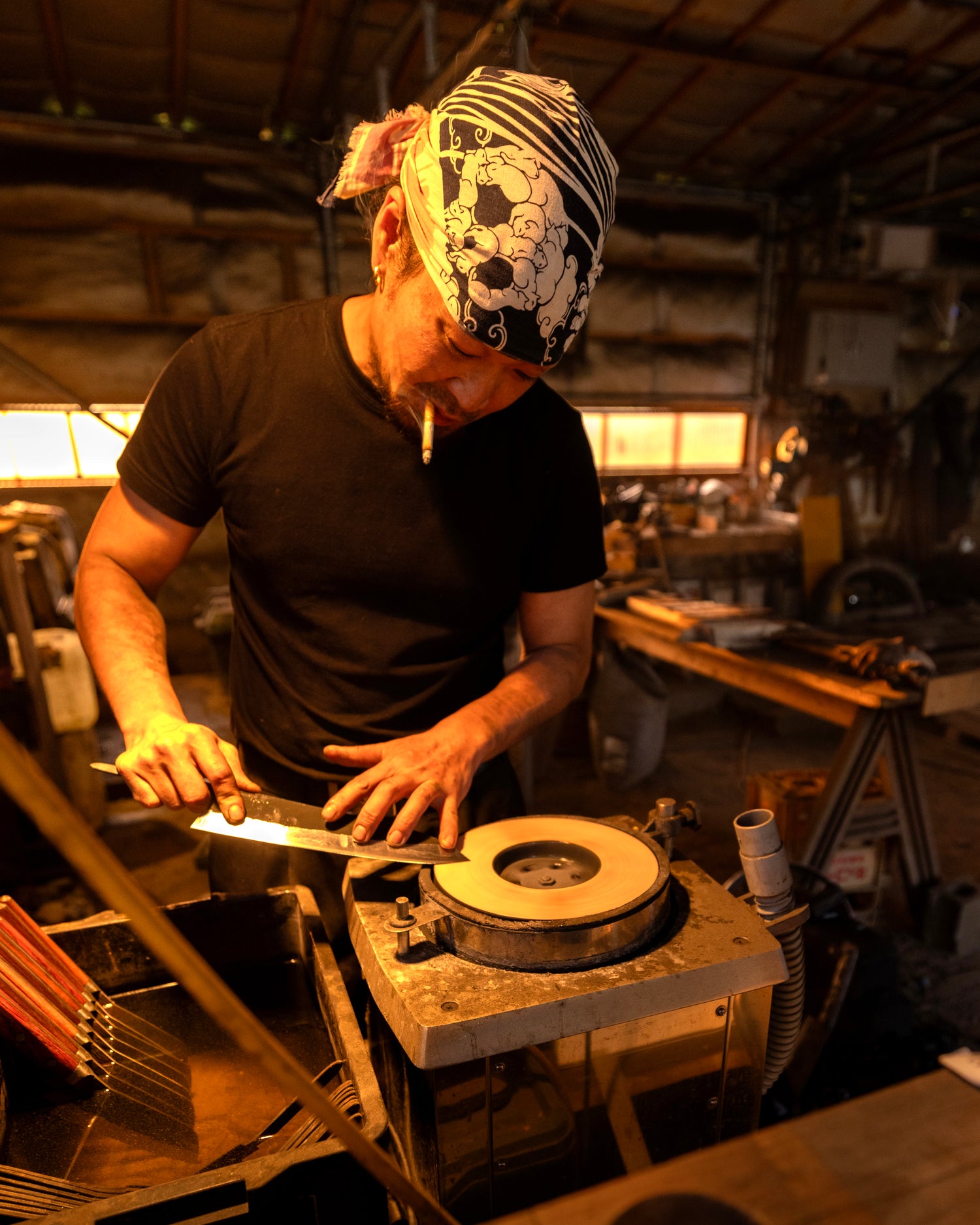
Hagane-dashi 鋼出し and Kiriha-zukuri 切刃造り
Exposure of the steel and refining of the angle
The cutting edge is formed using grinding wheels of different grits. This step determines the angle and sharpness of the cutting edge.
Honba-zuke 本刃付け
Final sharpening
The blade is polished and sharpened manually on Japanese whetstones, often natural, to achieve a razor sharp edge and an aesthetic finish.
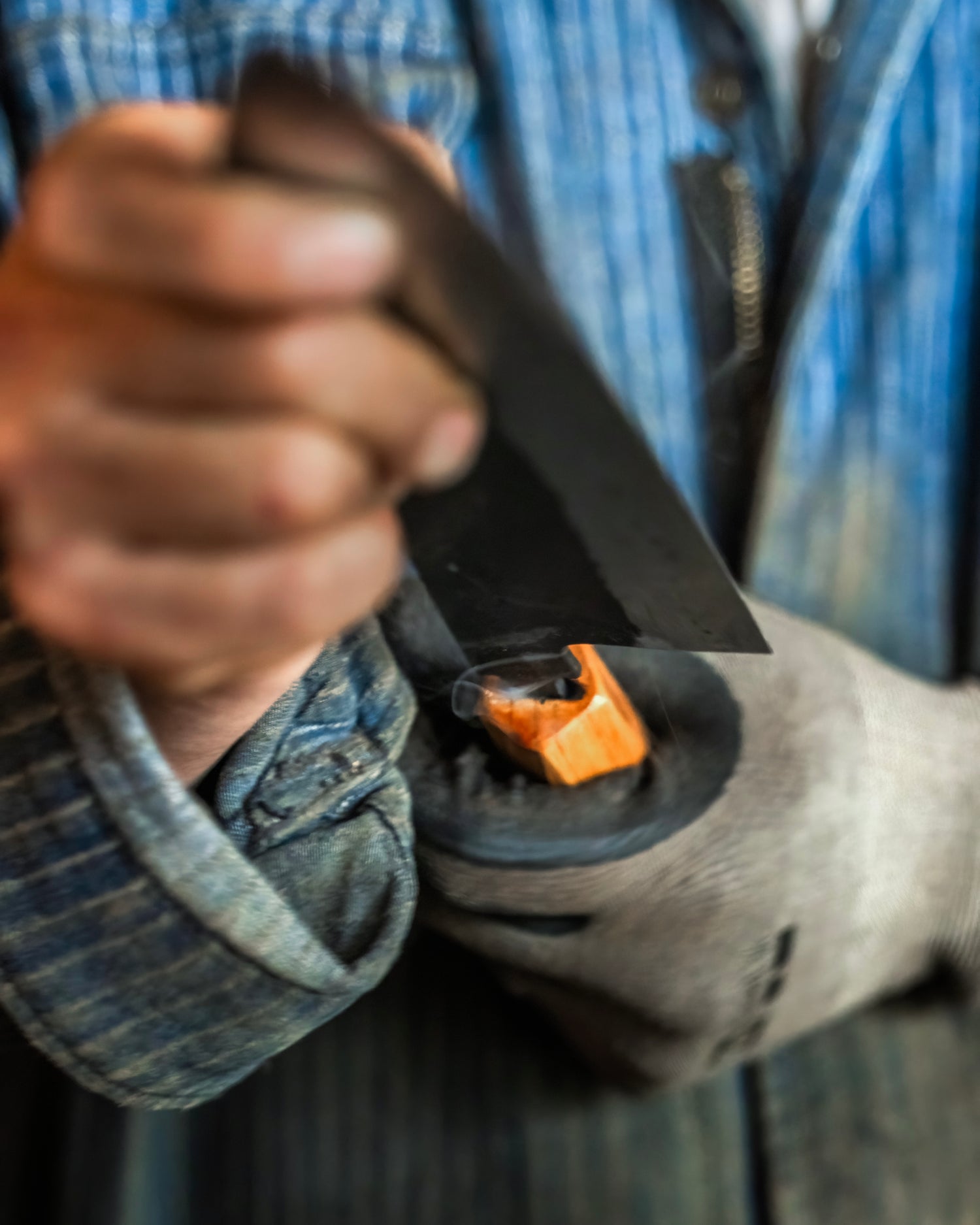
Etsuke 柄付け
Installing the handle
The blade's tang is inserted into a wooden handle and then securely fastened.

Shirogami ichi 白紙一号
White carbon steel
White steel represents the purest carbon steel. Its components are primarily iron and carbon. Shirogami ichi has slightly more carbon than the more common Shirogami ni, giving it increased hardness.
Shirogami is among the easiest steels to sharpen and is capable of achieving a perfectly polished, mirror-like edge. This steel can be forged to incredible hardness, resulting in exceptional edge retention. Why do you think knife and sword makers value this steel so much?
Carbon knives require special care because they are reactive and prone to rust. Be sure to wipe the blade regularly during use, as well as wash and dry it thoroughly after use. However, once a beautiful, robust patina has formed on the blade, it will be less prone to rust. Patina is your friend!
Steel composition: Carbon (C) 1.25–1.35%, Silicon (Si) 0.1–0.2%, Manganese (Mn) 0.2–0.3%.