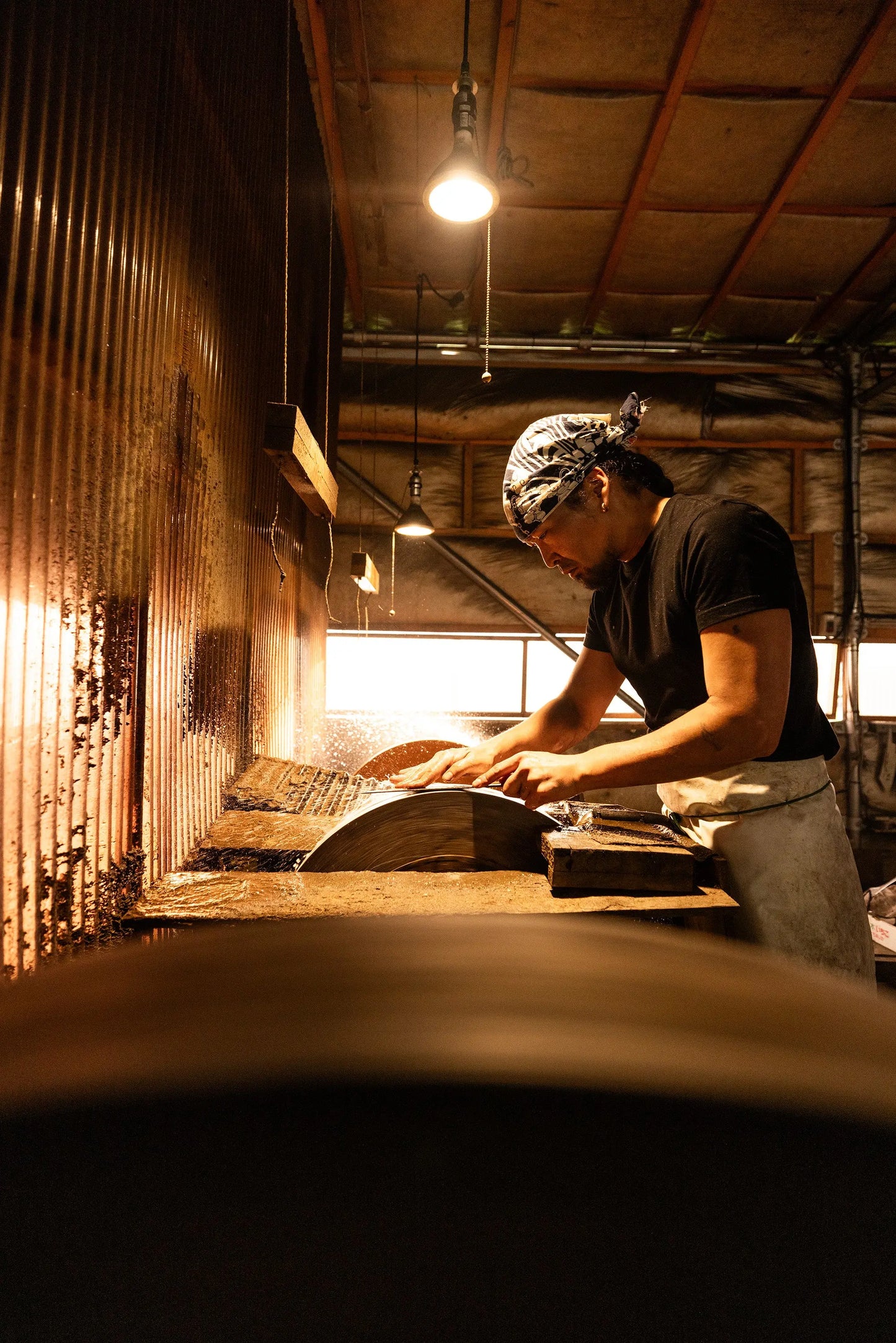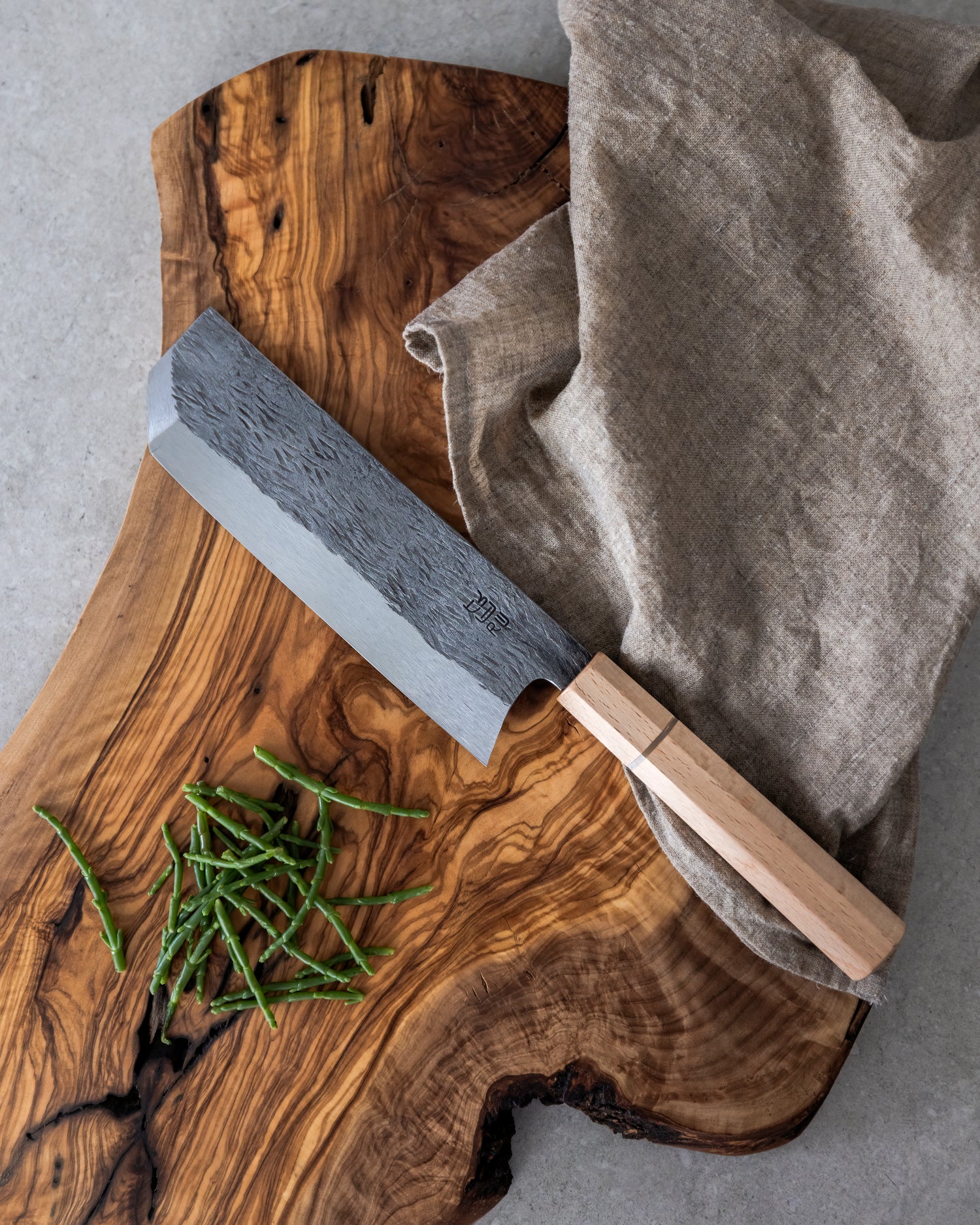
Hand-forged knives are valuable tools that require regular maintenance to ensure their performance and extend their lifespan. Follow this guide to maintain your knives and get the most out of them.
After use

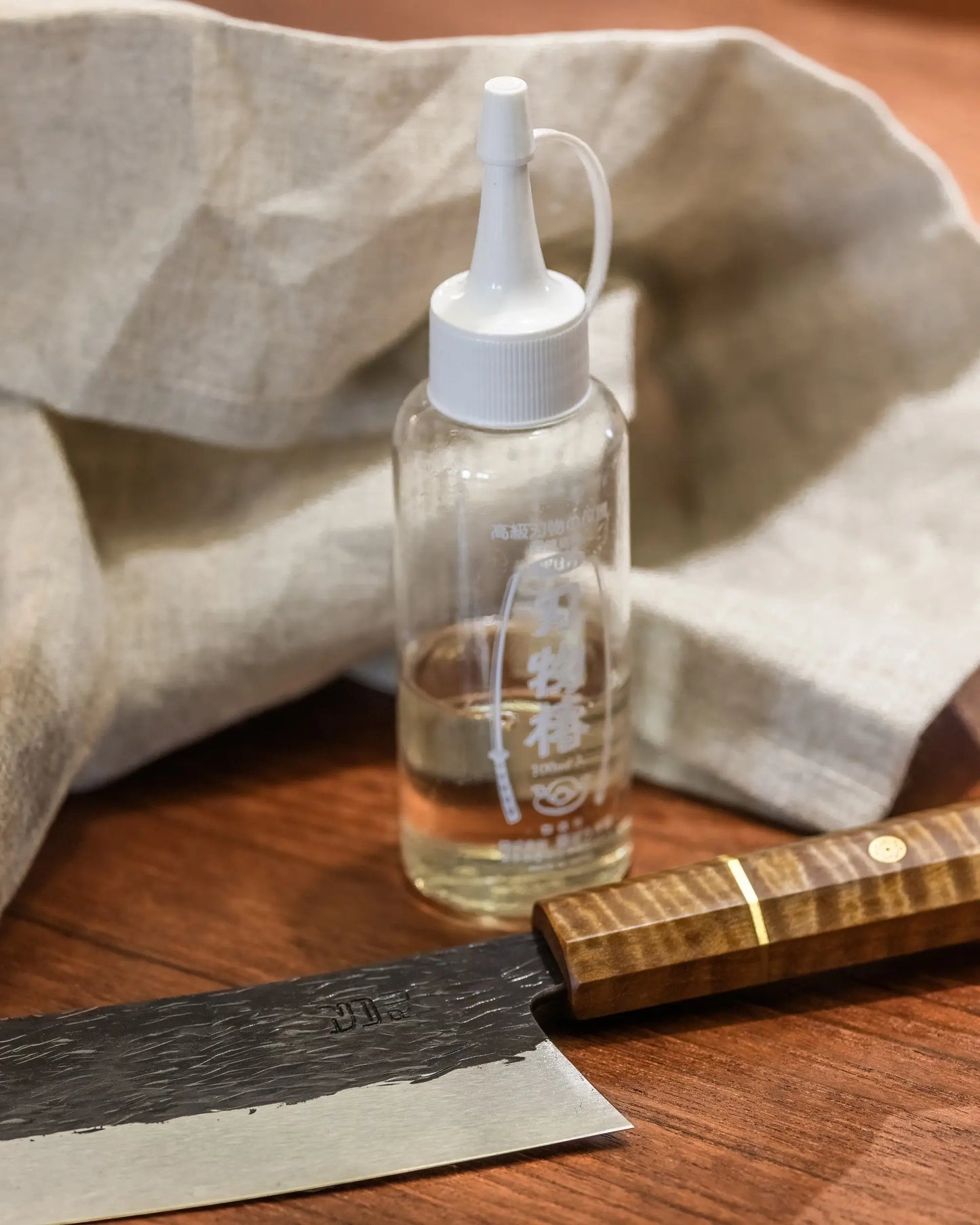
Things not to do
Inspect your knives regularly for signs of damage or corrosion. If you notice cracks, rust spots, or other problems, take immediate action to resolve them. Preventative maintenance will help prevent future damage and maintain the quality of your knives.
By following our care guide, you can ensure long life and optimal performance for your precious Japanese knives.
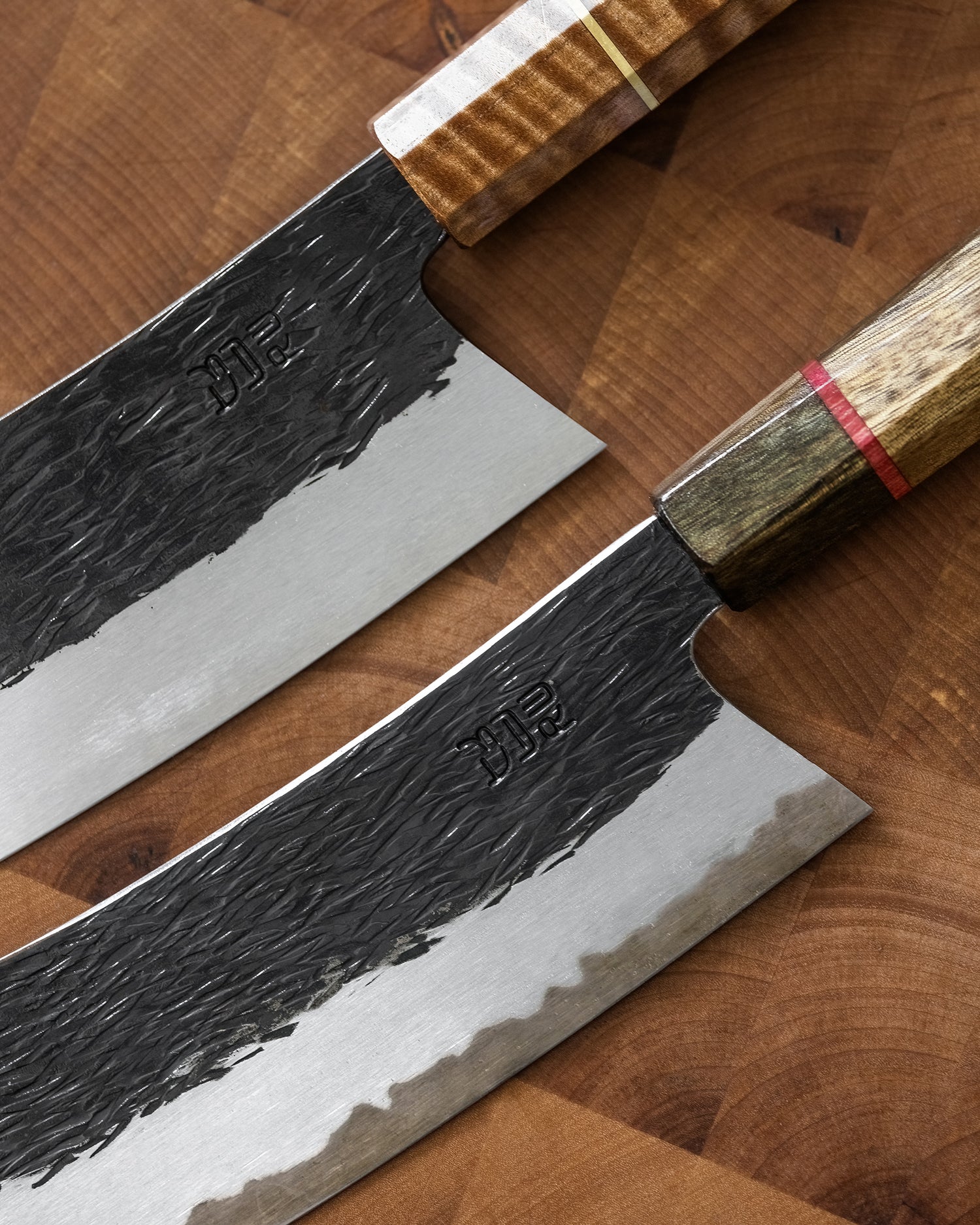
The patina
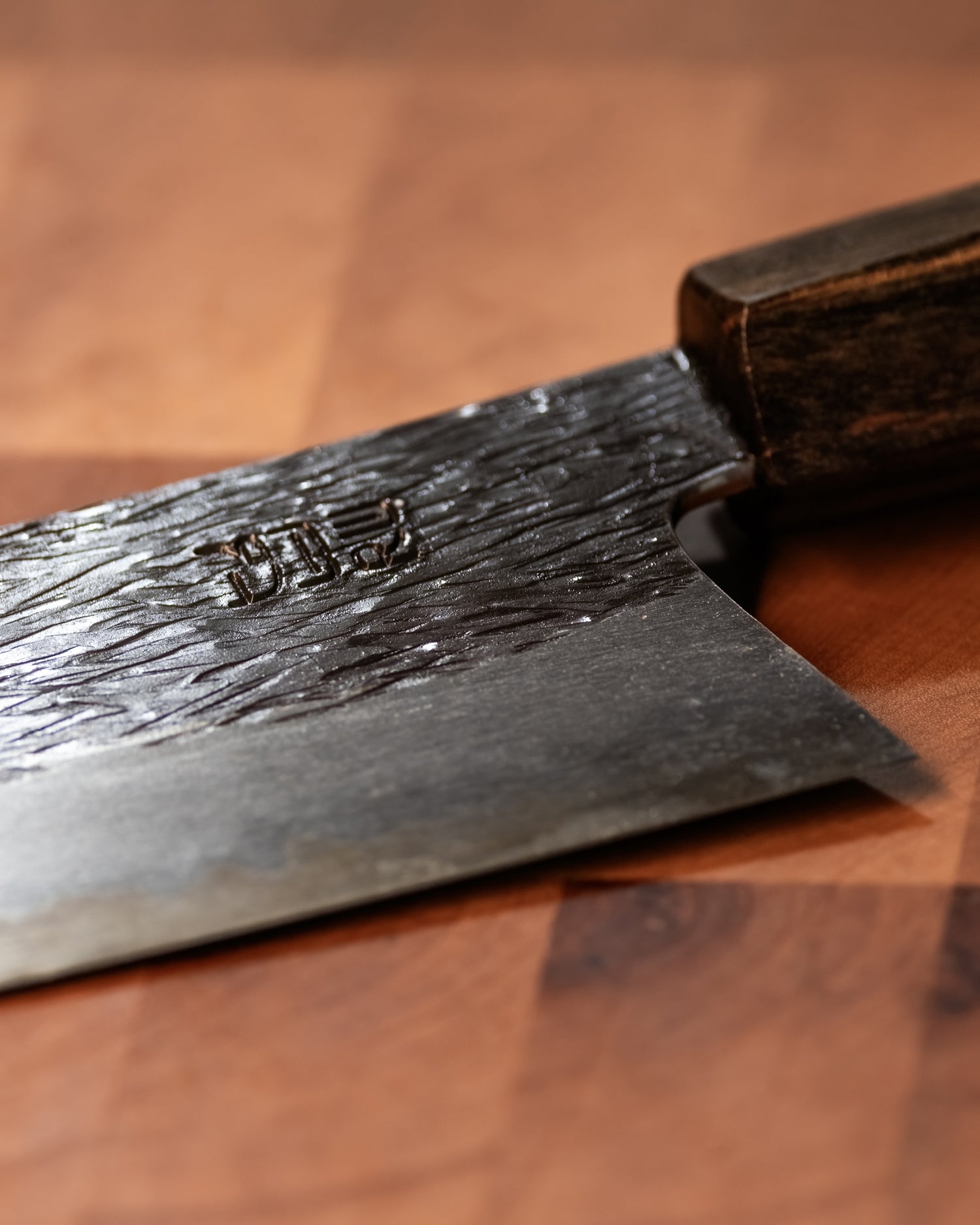
The beauty of a carbon steel knife is that it evolves with you. The top knife is freshly unwrapped, its blade shiny and intact. The bottom knife has already been used for many preparations, its surface developing a natural patina, formed by the reactions between the steel and the food.
This patina isn't just aesthetic. It protects the steel from rust, demonstrating the care you take of your tool. Each knife becomes unique, shaped by your gestures, your recipes, and your cooking. This is one of the charms of carbon steel, prized in Japanese cutlery for its incomparable cutting finesse.


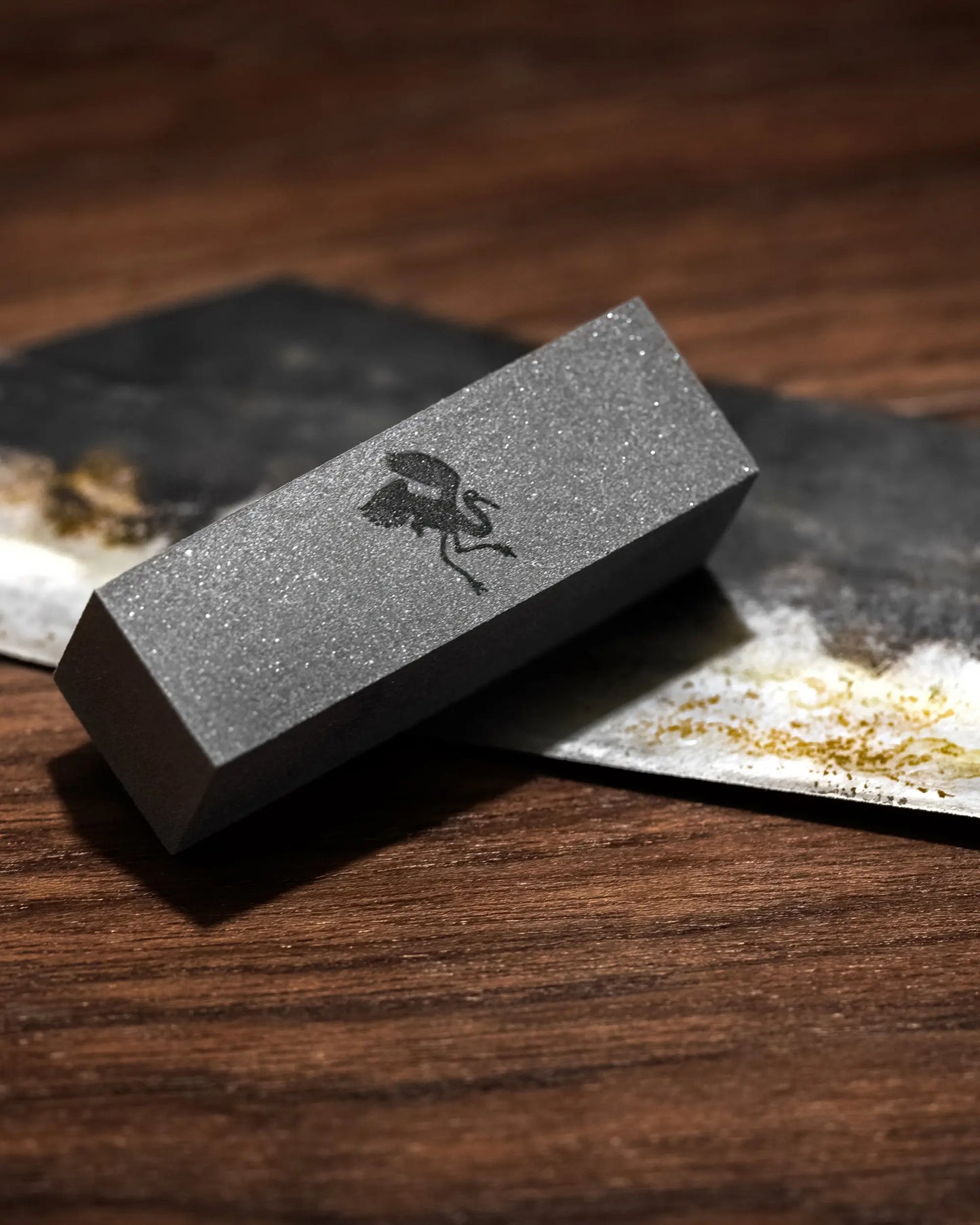
Sharpening and honing
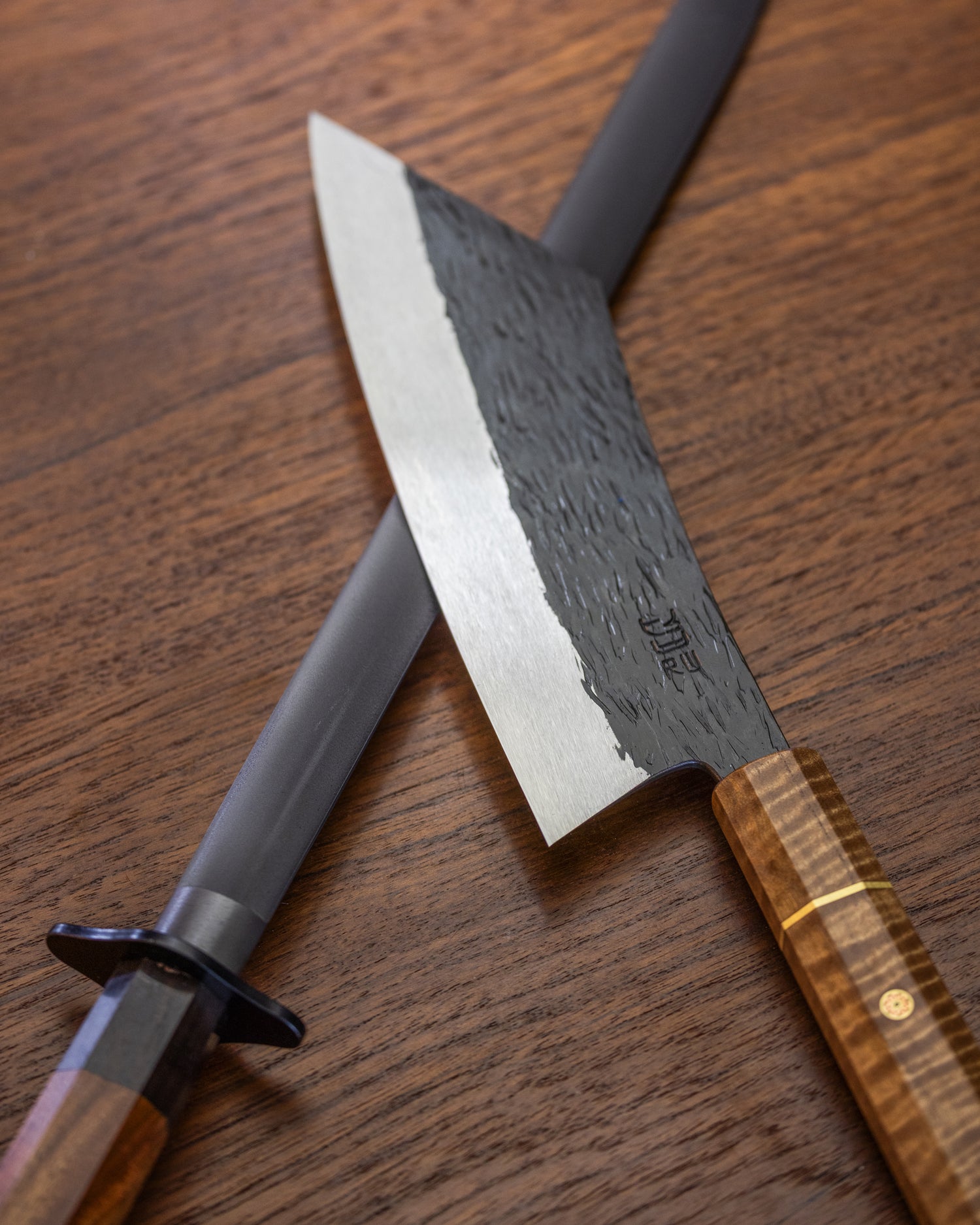
Honing
Honing is the process of maintaining a blade's edge by making it finer and sharper. Unlike sharpening, which removes metal to restore the edge, honing typically removes only a small amount of metal to realign the blade's edge. This results in a finer, longer-lasting edge. Honing is often done more frequently than sharpening to maintain a knife's edge. It is usually done using a rattail or very fine ston
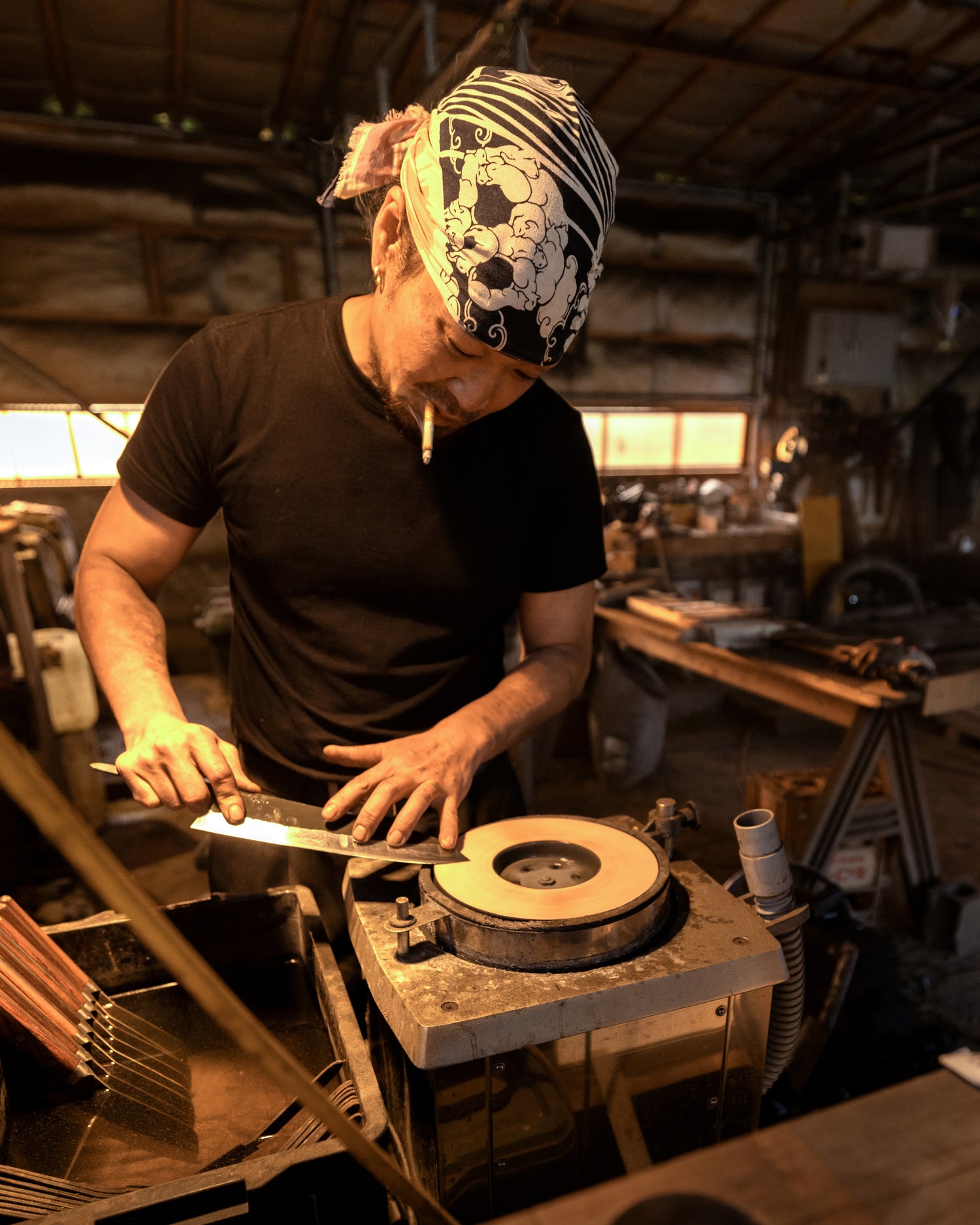
Sharpening
Sharpening is the process of restoring a blade's edge by removing a thin layer of metal to regain or improve its sharpness. It is a more aggressive process than honing and is typically used when the edge is dull or damaged. Sharpening can be done with a whetstone, grindstone, or other abrasive tool. It may also require the use of a specific angle to achieve the desired sharpness.